

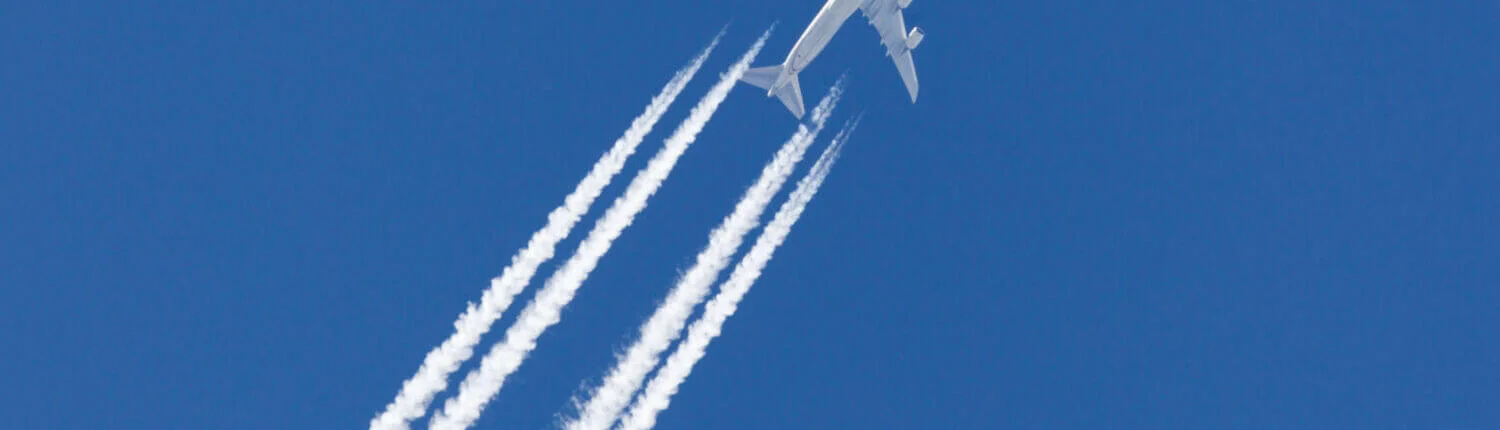
How High do Passenger Planes Fly?
Most commercial passenger jets typically cruise at an altitude of 30,000 to 42,000 feet. This is between 5 to 7 miles up in the sky or 8 to 11 kilometres (8,000 to 11,000 meters). Aircraft cruise at this high altitude due to enhanced fuel efficiency when compared to lower levels. For mid and long haul flights, the aircraft’s cruise altitude will vary throughout the flight. As the aircraft burns fuel, it becomes lighter which increases it’s optimum cruise altitude. Therefore, it will often climb to a higher altitude at various stages throughout the flight.
What is a ‘Flight Level’?
In most countries around the world, when at high altitude, the aircraft’s height is reported as a ‘Flight Level’ in feet. The reported flight level is the current altitude of the aircraft but with two of the zeros removed from the end. For example, 36,000 feet is reported as Flight Level 360 (FL360), 34,000ft would be reported as FL340. At lower levels, aircraft report their height as an altitude above sea level.
The difference between an altitude and flight level is that an altitude is measured against the local atmospheric pressure setting (which varies from location to location) where as a flight level is measured against a uniform pressure setting (1013.2 HPa) all across the world to ensure all aircraft are measuring their height against the same datum. If it wasn’t done this way, pilots would have to continuously be changing the altimeter reference datum or if they didn’t do this separation between aircraft could end up being much less than the legally required 1,000ft.
Some countries like China still require aircraft to report their height in meters rather than feet.
How long does it take an aircraft to reach its cruise altitude?
If you assume a typical cruise altitude of FL350 (35,000ft), it will take most aircraft around 20 to 25 minutes to reach their cruising level after take-off. However this will vary depending on the weight of the aircraft (and therefore how quickly it can climb), airspace restrictions, outside air temperature (warmer air is less dense which means the engines can produce less thrust) and any altitude restrictions during the departure (for example, in busy airspace, some aircraft may be held at lower altitudes for longer to make sure they are clear of other aircraft above them and ensure adequate spacing)
Even vs Odd Flight Levels
In the majority of airspace around the world, if an aircraft is travelling Eastbound (heading 360 – 179 degrees) they must fly at an odd flight level (e.g. FL330, FL350, FL370 etc.). An aircraft heading Westbound (180 – 359 degrees) must fly at an even flight level (e.g. FL 340, FL360, FL380 etc.). There are exceptions to this which include specific airways and the airspace over the North Atlantic.
What determines the altitude at which aircraft fly?
The altitude at which a commercial plane flies depends on a number of factors. Generally speaking, the higher the planes altitude, the more fuel efficient it is, however, it also has a maximum altitude it can fly which can vary for each flight. A planes maximum altitude is limited by:
- How much thrust the engines can produce at a given altitude, and this can vary with the outside air temperature, which continuously changes.
- The maximum pressurisation differential between the outside air and the pressurised cabin. Simply speaking, at altitude, there is a higher pressure within the cabin (to allow passengers to breath normally and keep a comfortable temperature) compared to outside. The high the altitude, the lower the pressure outside and therefore the bigger the difference in pressure. This pressure difference is continuously pushing on the fuselage of the aircraft, and there is a maximum pressure that can be sustained. This is typically around 8 PSI and occurs at around 41,000ft.
The altitude at which the aircraft flies may also be dictated by the capacity of the airspace in which it’s flying. For example, when the airspace is very busy (such as in Europe during the peak summer months), only certain altitudes may be available to fly at to ensure adequate separation between other aircraft.
How High Did Concorde Fly?
Concorde still holds the record for the highest commercial passenger aircraft cruise altitude. Because of its unique design and powerful engines, Concorde was able to cruise at about 60,000 feet or 18,000 meters (10 miles up). Despite Concorde being retired in 2003, current commercial passenger jets still can’t get anywhere near this cruising altitude.
How High do Light Aircraft Fly?
Small, unpressurised light propeller aircraft typically fly up to about 10,000 feet. Smaller aircraft like a Cessna 152 or PA-28 are limited in their maximum altitude due to the limitations of their piston engines and the pilot oxygen requirements above this altitude.
However, there are some supercharged single engine piston aircraft, like the SR22, can reach altitudes of up to 25,000ft.
How High do Military Aircraft Fly?
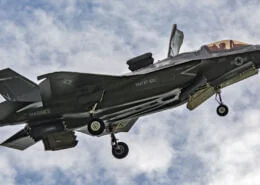
Advanced military fighter jets like the F22 Raptor, F35 Lightning or the Eurofighter Typhoon can reach altitudes of between 50,000ft – 65,000ft.
How High can Business Jet Fly?
Some business jet aircraft such as the Global 6000, the Falcon 5X and the Gulfstream G650 can reach altitudes of 51,000 feet. This is about 10,000 feet higher than the maximum cruising altitude of most commercial passenger planes.
What is the Highest Altitude a Plane has Ever Reached?
The highest altitude ever recorded by an aircraft with an ‘air breathing’ engine is the SR-71 Blackbird which could reach approximately 90,000 feet. Rocket propelled aircraft can travel higher but these are not considered aircraft in this sense.
Related Pages:
 Why do Planes Fly so High?
 Shutter StockWhat Happens if a Passenger Jet Flies Too High?
 How do Planes Fly?
 Shutter StockWhy Do Planes Abort Landings?
 Can Planes Reverse?
 Shutter StockCan Planes Land in Fog?
 Shutter StockWhy are there Still ‘No Smoking’ Signs on Planes?
 Can Planes Land in Heavy Rain?