


How to Finance Commercial Pilot Training: Funding, Loans & Scholarships
Updated 12 October 2026 | A comprehensive guide to financing airline pilot training in the UK.
For many aspiring airline pilots, the biggest obstacle to achieving their ambition isn’t necessarily the difficulty of learning to fly or passing the required examinations. It’s finding the money to pay for professional flight training.
Becoming a commercial airline pilot can involve a substantial financial commitment. Depending on the training route, organisation and qualifications required, the total cost can reach £100,000 or more. For somebody leaving school or considering a career change, raising that amount of money can understandably seem daunting.
However, there are several potential ways to fund professional pilot training. These include airline-funded cadet programmes, aviation scholarships, personal savings, modular training completed alongside employment, family assistance and borrowing.
Each option has advantages, limitations and financial risks. Some applicants may be eligible for a fully funded airline training programme, while others may need to build their qualifications progressively over several years.
Importantly, you don’t necessarily need to borrow a six-figure sum or secure a loan against a family property to become an airline pilot. Although some people choose that approach, it isn’t the only route available.
In this guide, we’ll explain the different ways to finance commercial flight training, where to look for sponsorship and scholarships, how pilot training loans work and what you should consider before committing a substantial amount of money.
We’ll also discuss the financial risks associated with professional training and explain how you can take steps to protect your investment.
How Can You Afford to Become an Airline Pilot?
There are several realistic approaches to financing professional flight training. The most suitable option depends on your circumstances, eligibility, financial resources and the training opportunities available.
Airline-Funded Training
Apply for a fully funded airline cadet programme where the airline meets the specified training costs.
Modular Training
Complete your qualifications progressively, allowing you to continue earning and pay for training in stages.
Savings & Scholarships
Use personal savings, family assistance or suitable aviation scholarships to cover some or all of the cost.
Loans & Finance
Consider borrowing where affordable, taking particular care with interest costs, repayment obligations and any security required.
Our advice: Investigate airline-funded programmes and other opportunities before assuming you need to take out a large loan. If self-funding is necessary, compare the complete cost of integrated and modular training and consider the financial consequences if employment takes longer than expected.
No training route guarantees airline employment, so it is essential to have a realistic financial plan.
In This Guide
- How much money do you need for pilot training?
- Comparing the main funding options
- Fully funded airline cadet programmes
- Pilot training scholarships and bursaries
- Paying for modular training while working
- Personal savings and family assistance
- Commercial pilot training loans
- Government student finance and university courses
- The military pilot training route
- Protecting your money when paying a flight school
- Creating a realistic training budget
- Frequently asked questions
How Much Does It Cost to Become an Airline Pilot?
Before considering how to finance professional flight training, it’s important to establish approximately how much money you’ll need.
The cost varies considerably depending on the training organisation, country, licensing authority and whether you choose integrated or modular training.
Integrated training normally involves enrolling on a structured, full-time programme that includes the principal stages of professional flight training within one coordinated course.
Modular training allows students to complete the necessary qualifications through separate approved courses, potentially using different training organisations.
Both routes can lead towards the professional qualifications needed to apply for suitable airline First Officer vacancies.
However, the cost and payment arrangements can be very different.
Professional Pilot Training Can Exceed £100,000
To provide an indication of current costs, British Airways stated that its fully funded 2026 Speedbird Pilot Academy covered approximately £100,000 in training costs for successful applicants.
Similarly, Jet2 described the commercial pilot training costs covered by its Jet2FlightPath programme as exceeding £100,000.
These are examples of the costs associated with particular airline training programmes, rather than fixed prices for all professional flight training.
Some courses may be less expensive, particularly where students complete their qualifications modularly. Others may cost more once additional training, accommodation and living expenses are included.
It’s also important to remember that the advertised price may not represent the total amount you’ll eventually spend.
Costs That May Not Be Included in Your Training Package
- Initial Class 1 medical examination.
- Aptitude tests and training organisation selection fees.
- Additional flying hours beyond the advertised allowance.
- ATPL theoretical examination fees and resits.
- Licensing authority fees and skill tests.
- MCC or APS MCC training, where not included.
- Advanced Upset Prevention and Recovery Training (UPRT).
- Accommodation and living expenses.
- Travel between training locations.
- Equipment, uniform and training materials.
- Aircraft type rating costs, where applicable.
- Loan interest, arrangement fees and other borrowing costs.
Before comparing training programmes, obtain a written breakdown of what is included in the advertised price and what may cost extra.
For a more detailed explanation of training expenses, read our How Much Does It Cost to Train as a Pilot? guide.
Commercial Pilot Training Funding Options Compared
There are several ways to approach the financial challenge of becoming an airline pilot.
The following table provides an overview of the main options and their advantages and limitations.
| Funding Option | Potential Advantages | Important Considerations |
|---|---|---|
| Fully funded airline programme | Can remove much of the financial burden of professional training. | Highly competitive, limited places and specific eligibility or contractual requirements. |
| Scholarships and bursaries | May cover some flying costs without conventional borrowing. | Many awards support introductory or PPL training rather than the entire commercial course. |
| Modular pay-as-you-go training | Can spread costs and allow continued employment during some stages. | Requires careful planning, with some professional courses needing full-time attendance. |
| Personal savings | Avoids loan interest and long-term repayment obligations. | May take several years and requires sufficient contingency funds. |
| Family assistance | May reduce the amount of commercial borrowing required. | Financial agreements and potential risks to family members must be understood. |
| Personal or secured loans | Can make funds available sooner. | Interest, repayments, security and the risk of unemployment can create substantial financial exposure. |
| University-linked training | Eligible academic course elements may qualify for student finance. | Student finance does not normally cover commercial flying training costs. |
| Military flying career | Provides professional military training within a paid service career. | Requires military selection, service commitments and a genuine interest in the military role. |
For some applicants, the most appropriate approach may involve a combination of these options.
For example, someone might obtain a PPL through a scholarship, continue working while completing modular training and use personal savings to reduce the amount of additional borrowing required.
However, combining different funding sources requires careful planning to ensure each stage remains financially manageable.
Fully Funded Airline Cadet Pilot Programmes
One of the most attractive opportunities for aspiring pilots is obtaining a place on a fully funded airline cadet training programme.
Under these arrangements, an airline or sponsoring organisation covers specified professional training costs for successful applicants.
This can remove one of the most significant barriers to entering the aviation industry.
Fully funded programmes are particularly valuable to candidates who demonstrate the necessary aptitude and motivation but do not have access to substantial savings or family financial support.
However, places are limited and selection can be highly competitive.
British Airways Speedbird Pilot Academy
British Airways has established a fully funded pilot training programme through its Speedbird Pilot Academy.
In April 2026, the airline announced an investment of £18 million to support up to 160 cadet places.
British Airways stated that the programme would cover approximately £100,000 in pilot training costs for successful applicants.
The 2026 programme also included arrangements covering training accommodation, a subsistence allowance and an aircraft type rating, subject to the applicable programme terms.
For eligible applicants, this provides a significantly different financial proposition from paying independently for an integrated course.
However, the programme has a demanding selection process and specific academic, medical and other eligibility criteria.
The 2026 application window closed in April. Applicants interested in future opportunities should monitor the official British Airways Careers website rather than assuming applications are currently open.
British Airways Speedbird Pilot Academy →
Jet2FlightPath
Jet2 has also introduced a fully funded pathway for aspiring airline pilots.
In February 2026, the airline announced that its Jet2FlightPath programme would provide at least 60 additional aspiring pilots with the opportunity to undertake professional training without self-funding the advertised training costs.
The airline described the cost of the training as exceeding £100,000 and explained that the programme was designed to provide opportunities to applicants from different backgrounds.
As with other funded programmes, successful applicants must satisfy the selection criteria and meet the required standards throughout training.
Programme availability, application deadlines and contractual arrangements should always be checked directly with Jet2.
Read Jet2’s Jet2FlightPath Announcement →
Important: Not All Airline Cadet Programmes Are Fully Funded
An airline-branded cadet programme does not automatically mean the airline pays for your training.
Different programmes may offer very different financial and employment arrangements.
- Fully funded: The airline covers the specified training costs.
- Partially funded: The airline or another organisation contributes towards certain costs.
- Self-funded cadet programme: The applicant finances training despite the programme being associated with an airline.
- Mentored programme: The airline may provide guidance or recruitment opportunities without necessarily funding training.
- Conditional employment pathway: Employment may be offered subject to successful training, assessment and other contractual conditions.
- Loan-supported programme: Financing may be available through a particular arrangement, but the student may still remain responsible for repayment.
Always obtain the written programme terms before accepting an offer. Establish who is responsible for the training costs, what happens if you fail a stage and whether any repayment or employment obligations apply.
How Can You Improve Your Chances of Obtaining a Funded Place?
Because funded programmes can attract large numbers of applicants, preparation is important.
Airline cadet selection processes commonly assess more than academic qualifications.
Depending on the airline, applicants may encounter:
- Numerical reasoning and aptitude assessments.
- Spatial awareness and coordination exercises.
- Interviews assessing motivation and suitability.
- Group exercises and teamwork assessments.
- Technical or general aviation knowledge questions.
- Medical and other eligibility checks.
Research the profession thoroughly, understand the responsibilities of an airline pilot and prepare for the type of selection process associated with your chosen programme.
Most importantly, apply through the official recruitment channel and verify that the opportunity is genuine.
For more information, see our Flight Training Sponsorship Options guide.
Pilot Training Scholarships and Bursaries
Scholarships and bursaries offer another potential source of financial assistance for aspiring pilots.
Various aviation organisations and charitable bodies provide awards designed to help individuals begin flying or develop their qualifications.
However, it’s important to distinguish between an aviation scholarship and full sponsorship of an airline pilot training programme.
Many scholarships provide a limited number of flying hours, introductory training or support towards a Private Pilot Licence (PPL).
These awards can be extremely valuable, but they don’t necessarily pay for the full commercial training pathway.
The Air League
The Air League provides scholarships and other opportunities intended to help individuals gain experience in aviation and develop their potential careers.
Its flying scholarship programmes include introductory and more advanced awards.
For example, published opportunities include awards providing several hours of powered flying, with some programmes supporting further progression towards solo flying or a PPL.
Eligibility criteria, application windows and the training provided vary between awards.
Some scholarships require applicants to meet particular age, residency, medical or membership criteria.
These opportunities can be particularly useful for people who want to begin flying but cannot yet afford substantial training costs.
Explore Air League Flying Scholarships →
The Honourable Company of Air Pilots
The Honourable Company of Air Pilots also provides flying scholarships, supported by a range of sponsors and charitable organisations.
Its awards have included PPL scholarships, gliding scholarships and instructor training opportunities.
In 2026, the organisation announced twelve PPL scholarships, five Flight Instructor scholarships and forty-eight gliding scholarships.
For a successful applicant, a PPL scholarship may provide a substantial contribution towards the early stages of a professional flying career.
However, recipients must still arrange funding for any additional training required to obtain their commercial qualifications.
Explore Air Pilots Flying Scholarships →
How to Approach Scholarship Applications
Scholarships are worth investigating, particularly if you’re at the beginning of your aviation journey.
However, we’d recommend keeping a few points in mind:
- Check the current eligibility criteria carefully.
- Establish exactly which flying or training costs are covered.
- Consider whether the award can be used towards your intended licensing pathway.
- Understand any obligations associated with accepting the scholarship.
- Prepare a thoughtful application demonstrating genuine motivation and commitment.
- Continue planning how to finance the remaining stages of professional training.
Don’t assume an award described as a flying scholarship will automatically fund a complete commercial pilot licence.
Financing Modular Flight Training While You Work
For applicants who cannot obtain a fully funded programme and do not have enough savings for an integrated course, modular flight training may provide a more manageable financial approach.
Modular training involves completing the various professional qualifications through separate approved courses.
Rather than committing to one continuous programme, you can progress through the different stages when you have the necessary experience, time and funds.
For example, you might begin by obtaining a PPL at a local flying school, continue working while building flying experience and save towards the professional theory, CPL and instrument rating stages.
This approach can spread the financial commitment over a longer period and potentially reduce the amount of borrowing required.
How Does the Modular Training Route Work?
A typical modular pathway includes:
- Private Pilot Licence: Complete the initial training required to qualify for private flying.
- Hour building: Accumulate the relevant flying experience required for later professional courses.
- ATPL theoretical knowledge: Complete the approved ground school and examinations.
- Commercial Pilot Licence: Undertake professional practical flight training and the required skill test.
- Multi-engine and instrument qualifications: Obtain the relevant privileges for the intended professional pathway.
- MCC or APS MCC and Advanced UPRT: Complete the appropriate additional professional training.
The actual sequence may differ, depending on the approved courses and qualifications already held.
The main financial advantage is that you may be able to spread your expenditure across the different stages instead of having to arrange funding for the entire course at the outset.
Can You Continue Working During Modular Training?
During some stages, particularly PPL training, hour building and certain theoretical knowledge courses, it may be possible to continue working.
This allows you to earn money and contribute towards the cost of training while maintaining greater financial flexibility.
However, it is important to understand that modular does not mean every stage can be completed casually or entirely in your spare time.
Some practical professional courses require concentrated periods of training and must follow the applicable approved syllabus.
Long interruptions may also increase costs because additional flying can be needed to maintain proficiency.
Examination credit and aircraft ratings have validity requirements, which should be considered when planning the overall training schedule.
Is Modular Training Cheaper Than Integrated Training?
Modular training can be less expensive, particularly when students carefully compare providers and manage their hour building.
However, it is not automatically cheaper in every case.
The final cost depends on factors such as aircraft rental rates, additional training hours, course fees, travel, accommodation and how efficiently the programme is completed.
A poorly planned modular programme can become considerably more expensive than originally expected.
Conversely, a carefully organised modular route may reduce both the total training cost and the amount of money that needs to be borrowed.
For a detailed comparison, read our Integrated vs Modular Flight Training Guide.
Funding Pilot Training Through Savings and Family Assistance
Another approach is to build up the money required before starting professional flight training.
This may involve working in another industry for several years, saving regularly and keeping your training fund separate from money needed for everyday expenses.
Although this approach can delay the start of your aviation career, it offers an important advantage: you may be able to complete training with less debt.
Some aspiring pilots choose to save enough to complete their training without borrowing, while others use savings to fund the initial stages before considering additional finance.
For somebody pursuing the modular route, the process may involve alternating periods of employment, saving and training.
The Advantages of Saving Before Training
The most obvious advantage is avoiding or reducing the interest and charges associated with borrowing.
It can also provide greater financial security if your circumstances change during training or airline employment takes longer than expected.
However, savings take time to accumulate, and the cost of flight training may change while you’re preparing.
It is therefore sensible to review training prices periodically and consider how much contingency funding you’ll need.
Can Family Members Help Fund Pilot Training?
Some aspiring pilots receive financial assistance from parents, grandparents or other family members.
This might take the form of a gift, an informal family loan or assistance with particular training expenses.
Family support can reduce the amount of commercial borrowing required, but it should still be approached carefully.
If money is being lent rather than gifted, it’s worth agreeing the repayment arrangements and what happens if circumstances change.
For substantial sums, obtaining independent legal and financial advice may help protect everyone involved.
The situation becomes more serious when family members are asked to guarantee a bank loan or provide their property as security. These arrangements create obligations and risks that are quite different from simply contributing money towards training.
Commercial Pilot Training Loans Explained
Borrowing money is another potential way to finance professional flight training.
However, the amount required for a complete professional course can make obtaining suitable finance difficult.
Some applicants investigate personal loans, specialist educational finance or lending secured against property.
The availability, interest rate, repayment period and security requirements depend on the lender and the borrower’s circumstances.
It’s important not to assume that every bank offers a specialist pilot training loan, or that a lender will approve an application simply because the borrower has been accepted by a flight school.
Unsecured Personal Loans
An unsecured personal loan does not normally require you to provide a particular property as security for the borrowing.
However, lenders will assess factors such as your income, credit history, existing financial commitments and ability to repay.
The amount available may be insufficient to finance an entire commercial pilot training programme.
For this reason, some modular students may consider smaller amounts of borrowing for particular stages of training rather than attempting to finance the complete pathway with one loan.
However, unsecured borrowing still carries risks. Failure to meet repayments can result in additional charges, damage to your credit history and recovery action by the lender.
Loans Secured Against Property
Some people consider borrowing against a property to finance professional flight training.
This might involve remortgaging, taking a further advance or arranging another form of secured borrowing, subject to the lender’s requirements.
Property-backed borrowing can make larger amounts of finance available in some circumstances, but it introduces a particularly serious risk.
If the repayments cannot be maintained, the property used as security may ultimately be at risk of repossession.
This is especially important where a family home is involved.
Professional pilot training does not guarantee employment, and nobody can be certain when a newly qualified pilot will obtain their first airline position.
Before considering property-backed borrowing, the person responsible for the loan should obtain appropriate independent financial and legal advice and understand the full repayment obligations.
Think Carefully Before Securing Pilot Training Against a Family Home
Borrowing against a home to finance a flying career can expose family members to significant financial consequences.
Before entering such an arrangement, consider:
- Who is legally responsible for making the repayments?
- What happens if the student cannot complete training?
- What happens if no airline job is available after graduation?
- Can repayments be maintained using existing income?
- How could an increase in interest rates affect affordability?
- What happens if the family experiences an unexpected financial difficulty?
- What are the consequences if the loan cannot be repaid?
Do not base the affordability of secured borrowing solely on an anticipated future airline salary.
What Is a Guarantor Loan?
A guarantor loan is an arrangement in which another person agrees to become responsible for repayments if the borrower fails to meet their obligations.
The guarantor is often a family member, although lenders may establish their own eligibility criteria.
Importantly, a guarantor loan and a loan secured against property are not necessarily the same thing.
A guarantor may become legally liable for outstanding repayments without a particular property being pledged as security. Other lending arrangements may involve property security as well.
The exact obligations depend on the contract.
If you’re considering asking somebody to act as a guarantor, both parties should understand the risks and obtain appropriate independent advice.
MoneyHelper provides useful information about the responsibilities and potential consequences of becoming a guarantor.
MoneyHelper – Guarantor Loans Explained →
What About Flight Training Loans With Deferred Repayments?
Some educational or specialist lending arrangements may allow repayments to begin after a specified period rather than immediately.
For someone undertaking full-time training without a regular salary, this may initially seem attractive.
However, a repayment holiday doesn’t necessarily mean that interest stops accumulating.
Depending on the loan agreement, interest may continue to be charged and added to the outstanding balance during the period when repayments are deferred.
This can increase the total amount that eventually needs to be repaid.
Before accepting any such arrangement, ask the lender to explain exactly how interest is calculated, when repayments begin and how the outstanding balance may change during training.
What to Check Before Taking Out a Pilot Training Loan
When comparing borrowing arrangements, don’t focus exclusively on the advertised interest rate.
Make sure you understand:
- Amount borrowed: How much money will you actually receive?
- Interest rate: Is it fixed or variable?
- Total amount repayable: How much will you pay over the entire loan term?
- Monthly repayments: How much must you pay and when do repayments begin?
- Repayment holidays: Does interest continue to accumulate during any deferred-payment period?
- Fees: Are there arrangement, administration or other charges?
- Early repayment: Can you repay the loan early, and are there charges for doing so?
- Security: Is property or another asset being used as security?
- Guarantor obligations: Could another person become responsible for the debt?
- Financial difficulties: What happens if you cannot maintain the payments?
Compare the complete cost of borrowing and consider whether repayments remain affordable if your expected career progression does not occur.
Why Future Airline Earnings Shouldn’t Be Your Only Financial Plan
Airline pilots can enjoy rewarding careers, but earnings vary considerably according to employer, aircraft type, experience, base location and seniority.
A newly qualified pilot may not earn the salary they originally anticipated, and obtaining the first flying position can take time.
There may also be further costs associated with type ratings, relocation or maintaining professional qualifications, depending on the circumstances.
For these reasons, borrowing decisions should be based on a realistic assessment of affordability rather than assuming an immediate, well-paid airline position will be available after training.
Can You Get a Government Student Loan for Pilot Training?
This is another common question from aspiring airline pilots.
In England, government-backed higher education student finance is designed primarily to support eligible students attending designated courses.
However, standalone commercial pilot training is not generally treated in the same way as a conventional university degree.
Consequently, you should not assume that a government student loan will cover the cost of obtaining your commercial pilot licence and associated flying experience.
What About University Degrees That Include Flight Training?
Some universities offer aviation-related degrees that incorporate flight training or provide opportunities to undertake professional flying qualifications alongside academic study.
These programmes can create confusion because they combine two different types of expenditure.
Eligible students may be able to obtain student finance for the designated academic elements of an approved degree.
However, the practical flying training required for professional pilot licensing may involve substantial additional fees that are not covered by ordinary government student finance.
In July 2026, the UK Department for Education confirmed that eligible academic elements of designated pilot training degree programmes can receive student finance, but standalone commercial pilot training courses that do not meet the standard eligibility criteria remain outside the scheme.
The funding arrangements differ across the UK, and applicants should establish the specific rules relevant to where they live and study.
Before Applying for a University Aviation Course
Ask the university to explain clearly:
- Which academic tuition fees are eligible for student finance.
- Whether any maintenance support may be available.
- Which practical flight training costs are charged separately.
- Whether the quoted course price includes all required licences and ratings.
- What happens if you discontinue flying training but remain on the academic course.
- Whether additional flying hours or examination attempts involve extra fees.
A degree programme involving aviation does not automatically mean the government will finance the professional flying qualifications.
For the government’s published position, see the Department for Education’s July 2026 Parliamentary Answer.
Becoming a Pilot Through the Military
Another route worth considering is pursuing a flying career in the armed forces.
Military pilots receive the training required for their service role, and successful candidates can develop substantial flying experience while serving.
However, military flying is a career in its own right rather than simply a way to obtain subsidised civilian airline pilot qualifications.
Military selection is competitive, and the role involves operational responsibilities, possible deployments and service commitments.
Applicants should therefore pursue this route because they genuinely want a military aviation career, not solely because they hope to avoid paying for civilian flight training.
Can Military Pilots Become Airline Pilots Later?
Military flying experience can provide valuable preparation for a subsequent civilian aviation career.
However, military qualifications do not automatically convert into every civilian licence or rating without additional requirements.
The UK CAA operates a Military Aircrew Accreditation Scheme under which eligible military flight crew may receive specified credits towards civilian qualifications.
The amount of credit depends on the individual’s military qualifications and experience and the applicable licensing requirements.
Additional theoretical examinations, training, assessments or licensing action may still be necessary.
UK CAA – Military Aircrew Accreditation Scheme →
How to Protect Your Money When Paying a Flight School
One of the most important aspects of financing commercial pilot training is protecting the money you’ve committed.
Flight training organisations can face financial difficulties, just like businesses in other industries.
If a school becomes insolvent or stops operating before you complete your course, you may face disruption, additional costs and potentially the loss of prepaid training fees.
This risk exists whether you’re attending an integrated academy or completing modular training.
Does CAA Approval Protect Your Training Fees?
No. This is an important distinction.
The UK Civil Aviation Authority regulates the relevant safety and training standards of approved flight training organisations.
However, CAA approval does not guarantee that a flight school is financially secure.
The CAA explicitly explains that its approval process does not certify the financial health or stability of a training organisation.
Consequently, applicants should take their own precautions before paying substantial sums.
Ways to Reduce Your Financial Exposure
Before making a substantial payment, consider the following:
- Pay in stages: Investigate whether fees can be paid as training is delivered rather than entirely upfront.
- Review the contract: Understand the refund policy, cancellation terms and arrangements if the school cannot complete the course.
- Ask about protected funds: Establish whether any suitable escrow or other independently administered payment arrangements are available.
- Understand payment protection: Certain credit card payments may benefit from consumer protections, but the extent of protection depends on the transaction and applicable rules.
- Check the organisation: Investigate its trading history, financial arrangements and ability to deliver the advertised training.
- Speak with students: Ask current students about delays, unexpected costs and how the school handles problems.
- Clarify additional charges: Establish the cost of extra training, examination resits and other unforeseen requirements.
- Understand training-record arrangements: Ask how your records will be retained and transferred if you need to change training provider.
The aim is to limit the amount of money exposed to unnecessary risk at any one time.
Should You Pay the Full Course Fee Upfront?
Some training organisations offer discounts to students who pay a substantial amount of the course fee in advance.
Although these discounts may appear attractive, they should be assessed against the additional financial risk.
If a school cannot deliver the training you’ve already paid for, recovering unused fees may prove difficult.
Where possible, consider arrangements that link payments to actual training progress.
The CAA identifies staged payments, suitable escrow arrangements and paying for individual lessons as possible ways to reduce financial exposure.
The most appropriate arrangement will depend on the school, course structure and contract.
For more information, see the UK CAA’s Guidance on Choosing a Flight School and Protecting Your Investment.
What Happens If Your Flight School Closes?
If a flight training organisation ceases trading before you’ve completed your qualifications, you may need to arrange for another approved organisation to assess your previous training and establish what remains to be completed.
This can involve additional costs, scheduling difficulties and potential delays.
It’s also important to ensure that your training records can be recovered and appropriately verified.
The CAA advises students to consider the security and retention of training records because the authority does not necessarily hold individual training records for every student.
Before enrolling, ask how your training records are maintained and what arrangements would apply if you needed to transfer to another organisation.
How to Create a Realistic Commercial Pilot Training Budget
Before taking out a loan, using savings or committing to a training contract, we recommend creating a complete financial plan.
This should include more than the advertised training fees.
Your budget should reflect the actual cost of completing the qualifications, supporting yourself during training and meeting your financial obligations while looking for employment afterwards.
| Budget Category | What to Include |
|---|---|
| Training fees | The complete price of the intended professional training programme or individual modular courses. |
| Licensing and examinations | Examination fees, skill tests, medical assessments and licensing costs not included in the course. |
| Additional training | A contingency for extra flying hours, refresher training or examination resits. |
| Living expenses | Accommodation, food, travel, insurance and other personal costs during training. |
| Lost earnings | The income you may give up while attending a full-time course. |
| Borrowing costs | Interest, arrangement fees and any other financing charges. |
| Employment contingency | Living costs and financial obligations during a period without airline employment. |
| Post-training expenses | Potential relocation, currency, licensing, rating or other costs associated with pursuing employment. |
Don’t Forget the Cost of Not Working
One of the less obvious expenses associated with full-time integrated training is the income you may need to give up.
If you’re leaving an established career to attend a full-time course, consider not only the training fees but also the salary you’ll no longer receive.
For somebody with a mortgage, rent or other financial commitments, this can be a substantial consideration.
Modular training may allow you to continue earning during some stages, although intensive professional courses can still require time away from work.
Consequently, comparing the financial implications of integrated and modular training involves more than looking at their advertised prices.
Plan for the Possibility of Delayed Employment
Another important consideration is what happens after training.
Obtaining professional pilot qualifications does not automatically guarantee that you’ll secure an airline job immediately.
Recruitment opportunities can vary considerably depending on airline demand, economic conditions and the number of suitably qualified applicants.
You may need to continue working in another industry while applying for flying positions.
If you’ve borrowed a large amount of money, the repayments may still become due even if you haven’t secured professional flying employment.
Consider how you’ll manage your financial commitments in that situation before deciding to take on debt.
Ask Yourself These Questions Before Committing
- Can I afford the training without relying on an immediate airline job?
- Have I obtained a detailed written quotation showing the full expected cost?
- Do I have enough money available for unexpected training expenses?
- Can I support myself throughout the training period?
- How would I manage loan repayments if employment takes longer than expected?
- Would a modular training route reduce my financial exposure?
- Have I investigated fully funded programmes and suitable scholarships?
- Do I understand what happens if I cannot complete the training?
- Have I checked the training organisation’s approval and payment arrangements?
- Have I established that I meet the relevant Class 1 medical requirements?
If you cannot answer these questions confidently, it may be sensible to undertake further research before committing substantial funds.
Get Your Class 1 Medical Before Making a Major Financial Commitment
Before spending a substantial amount on professional flight training, one of the most important steps is to establish whether you meet the applicable medical requirements.
For the normal UK CAA and EASA professional licensing pathways, this involves obtaining a Class 1 medical certificate.
Medical requirements cover areas including vision, hearing, cardiovascular health and general medical fitness.
Some medical conditions require further investigation rather than resulting in automatic disqualification.
However, identifying a significant medical issue after paying for professional training can create considerable financial difficulties.
We therefore recommend arranging the relevant initial Class 1 medical assessment before entering into a major non-refundable training commitment.
For more information, see our Airline Pilot Medical Requirements Guide.
Which Funding Route Is Right for You?
Different funding arrangements may suit different applicants.
The following examples illustrate how your circumstances can influence the most appropriate approach.
Leaving School
If you’re leaving school without significant savings, fully funded airline programmes and suitable scholarships may be particularly worth exploring.
You might also consider gaining employment and building savings before committing to professional training.
Avoid assuming that substantial borrowing is the only way to begin an aviation career.
Changing Careers
If you’re already working, modular training may allow you to maintain your income while completing parts of the course.
This can reduce the need for borrowing and help you manage existing financial commitments.
However, remember to budget for periods of intensive training when working may not be practical.
Considering an Integrated Course
If you prefer a structured full-time programme, investigate the total course cost, payment arrangements and any finance required.
Compare different training organisations and consider whether the additional cost is justified for your circumstances.
Pay particular attention to the financial consequences of delays or not securing employment immediately.
A Practical Plan for Financing Your Pilot Training
If you’re still deciding how to fund your training, we’d suggest approaching the process in a structured way.
Step 1 – Establish Your Eligibility
Check the academic, medical and other entry requirements of your intended training route. Investigate the relevant Class 1 medical before making a substantial financial commitment.
Step 2 – Investigate Fully Funded Opportunities
Review airline cadet programmes, scholarship organisations and other opportunities that may reduce the amount of money you need to provide yourself.
Step 3 – Compare Integrated and Modular Training
Obtain detailed quotations and consider how the course structure affects both the direct training cost and your ability to continue working.
Step 4 – Calculate the Complete Cost
Include accommodation, examinations, additional flying, equipment, living expenses, borrowing costs and an appropriate contingency for delays.
Step 5 – Assess Your Financial Resources
Consider savings, income, family assistance and other potential funding sources. Establish whether any borrowing would remain affordable under less favourable circumstances.
Step 6 – Investigate the Training Organisation
Check the relevant regulatory approval, contractual arrangements, training capacity, payment structure and provisions for protecting prepaid fees.
Step 7 – Make a Decision Based on Financial Sustainability
Choose a route that provides appropriate training while remaining realistic about the financial commitment and the uncertainty surrounding future airline employment.
How to Finance Pilot Training – Frequently Asked Questions
How can I afford to become an airline pilot?
Potential options include fully funded airline cadet programmes, scholarships, personal savings, modular training completed alongside employment, family assistance and suitable borrowing arrangements.
The most appropriate option depends on your circumstances, eligibility and the financial risks you can reasonably accept.
Are there fully funded pilot training programmes in the UK?
Fully funded airline training opportunities do exist.
For example, British Airways and Jet2 both announced substantial fully funded cadet training programmes in 2026.
However, availability is limited, selection is competitive and application windows vary. Always check the airline’s official recruitment website for current opportunities.
Will an airline pay for my pilot training?
Some airlines offer fully or partially funded training programmes.
Others offer airline-linked cadet pathways that remain self-funded.
Always establish exactly which costs are covered, whether repayment obligations apply and what happens if the training is not completed successfully.
Can I get a student loan to become a pilot?
In England, ordinary government-backed higher education student finance does not generally cover standalone commercial pilot training.
Eligible academic elements of designated university aviation programmes may qualify for student finance, but practical flying costs are normally considered separately.
Applicants should confirm the current arrangements with the relevant university and student finance body.
Are there scholarships for aspiring airline pilots?
Several aviation organisations provide flying scholarships and bursaries.
For example, The Air League and the Honourable Company of Air Pilots offer various flying-related awards.
However, many scholarships support introductory flying, gliding or PPL training rather than covering the entire professional airline pilot qualification pathway.
Can I become a pilot without taking out a large loan?
It may be possible through a fully funded programme, scholarships, personal savings or a carefully planned modular training route.
However, the amount of money required depends on the qualifications, training organisation and individual circumstances.
Even modular training can represent a substantial financial commitment.
Is modular training cheaper than integrated training?
Modular training can be less expensive because students have greater flexibility over training providers, aircraft and the timing of different courses.
However, the total cost varies, and additional flying or delays can increase expenditure.
Both routes should be compared using complete, written quotations.
Can I work while completing pilot training?
Some stages of modular training can be completed alongside employment.
However, intensive professional courses may require substantial time away from work.
Integrated programmes are generally organised as full-time training and can be difficult to combine with regular employment.
Do banks offer loans specifically for pilot training?
The availability of specialist aviation training finance varies between lenders and over time.
Some applicants investigate personal loans, secured lending or other educational finance arrangements.
Borrowing approval depends on the lender’s criteria and the applicant’s financial circumstances. You should verify current products directly with authorised lenders rather than relying on outdated examples.
Do you need to own a property to obtain a pilot training loan?
Not every loan requires property security.
However, lenders may be unwilling to provide the full cost of an expensive professional training programme through unsecured lending alone.
Where property is used as security, the consequences of missed repayments can be serious.
Can my parents guarantee a pilot training loan?
Some lenders may accept suitable guarantors, subject to their lending criteria.
However, a guarantor can become legally responsible for repayments if the borrower fails to pay.
The financial obligations should be understood carefully, and independent advice may be appropriate.
Can loan repayments begin after I finish training?
Some financing arrangements may permit deferred repayments, but this depends on the lender and loan agreement.
Interest may continue to accumulate during a repayment holiday, increasing the total amount eventually owed.
Always ask for a clear explanation of the repayment schedule and total borrowing cost.
Should I borrow against my family’s home?
This involves a potentially substantial financial risk and should not be approached lightly.
If the loan is secured against a property and the repayments cannot be maintained, the property may ultimately be at risk.
Before entering such an arrangement, obtain appropriate independent financial and legal advice and consider whether repayments would remain affordable without an airline salary.
Will a flight school refund my money if I cannot finish training?
Refund arrangements depend on the contract, the reason for withdrawal and any applicable legal rights.
You should review the cancellation terms and establish how unused training fees are treated before paying.
Do not assume that all prepaid fees are automatically refundable.
Does CAA approval mean my training money is protected?
No. The CAA regulates the relevant safety and training standards but does not guarantee the financial stability of approved flight schools.
Students should investigate contractual protections, staged payments and other appropriate arrangements for reducing their financial exposure.
Can I become an airline pilot through the military?
Military flying careers can provide valuable training and experience.
However, the military is not simply an alternative civilian flight training provider. Applicants must meet military selection requirements and undertake the associated service commitments.
Military qualifications may provide credit towards civilian licences, but conversion is not necessarily automatic.
Does completing commercial pilot training guarantee an airline job?
No. Obtaining professional qualifications does not guarantee immediate employment.
Recruitment depends on airline demand, individual qualifications, assessment performance and other factors.
This is one of the main reasons to consider the financial risks carefully before borrowing substantial amounts.
Does FlightDeckFriend provide financial assistance for pilot training?
FlightDeckFriend does not provide pilot training scholarships, direct sponsorship or financial assistance.
However, our website provides information about training routes, funding opportunities and the considerations involved in pursuing a professional aviation career.
How Should You Finance Your Commercial Pilot Training?
There isn’t one funding method that is appropriate for every aspiring airline pilot.
For some applicants, a fully funded airline cadet programme may provide an opportunity to enter the profession without personally meeting the substantial training costs.
For others, modular training completed alongside employment may offer a more financially manageable approach.
Personal savings, suitable scholarships and family assistance can also contribute towards the cost of training.
Borrowing may be an option, but the associated interest, repayment obligations and potential exposure of family assets must be considered carefully.
The most important point is to make decisions based on realistic finances rather than relying on an anticipated future airline salary.
Professional flying can provide a rewarding career, but recruitment opportunities and career progression cannot be guaranteed.
Before committing substantial money, investigate your options, compare complete training costs, establish your medical eligibility and make sure you understand the financial consequences if circumstances change.
Continue Your Research Into Commercial Pilot Training
Financing your training is only one part of planning a career as an airline pilot.
You’ll also need to consider the qualifications required, the different training routes, the suitability of individual flight schools and your potential employment opportunities after graduation.
FlightDeckFriend provides a range of free guides to help aspiring pilots understand these subjects.
Flight Training Sponsorship
Explore airline-funded cadet programmes, sponsorship arrangements and other potential funding opportunities.
How Much Does Training Cost?
Understand the expenses associated with obtaining professional pilot qualifications.
Integrated vs Modular Training
Compare the main professional training routes, including their flexibility, timescales and financial implications.
Pilot Employment Prospects
Learn about finding your first airline job and the challenges newly qualified pilots may encounter.
Thinking About Becoming an Airline Pilot?
Our comprehensive Become a Pilot resources explain the qualifications, training routes, medical requirements and financial considerations involved in pursuing a professional flying career.
Whether you’re still at school, considering a career change or comparing professional training organisations, understanding the process can help you make informed decisions about your future.
Official Sources & Further Information
Airline sponsorship programmes, scholarships, borrowing arrangements and government funding rules can change. Always verify the current terms and eligibility requirements directly with the relevant organisation.
- UK CAA – Choosing a Flight School and Protecting Your Investment
- British Airways – 2026 Speedbird Pilot Academy Announcement
- Jet2 – 2026 Jet2FlightPath Announcement
- The Air League – Flying Scholarships
- The Honourable Company of Air Pilots – Scholarships
- Department for Education – Student Finance and Pilot Training
- MoneyHelper – Guarantor Loans
- MoneyHelper – Property-Secured Borrowing
Disclaimer: This article provides general educational information about financing commercial pilot training, primarily in the United Kingdom. It does not constitute regulated financial, lending, legal or investment advice. FlightDeckFriend does not provide loans, arrange credit or offer direct financial assistance for pilot training. Borrowing can involve significant risks, particularly where property or guarantors are involved. Training costs, airline sponsorship programmes, scholarships, lending criteria and government funding arrangements may change. Before entering into a financial agreement or making a substantial training payment, obtain appropriate independent advice and verify the relevant terms directly with the organisations concerned. Completion of professional pilot training does not guarantee airline employment.

Related Pages:
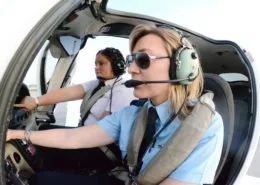 Flight Training Sponsorship Options
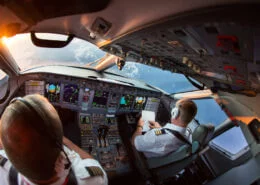 Integrated vs Modular Flight Training
 How Old Is Too Old – Flight Training
 Flight Training
 How to succed in intergrated flight training
 ShutterStockLEA Fully Sponsored Flight Training
 L3 Harris Announces Flight Training Scholarship
 ShutterstockIntegrated Flight Training Organisations