

Club Aviator

Club Aviator

Beyond the Cockpit: Why Club Aviator is the New “One-Stop-Shop” for Pilots & Crew
For many involved in aviation, the layover is often the most overlooked part of the duty cycle. We spend time meticulously planning our flights, fuel loads, and weather diversions, yet when it comes to the 24 hours on the ground, the planning usually starts at the hotel lobby.

Between navigating fatigue, shifting time zones, and short turnarounds, finding a high-quality meal, decent gym or something to do shouldn’t feel like a second job. Historically, crew have relied on random hints and tips or chaotic WhatsApp groups that ping at all hours of the night.

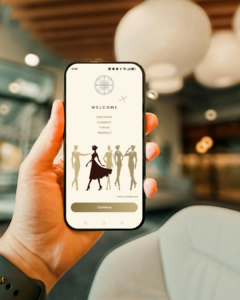
Enter Club Aviator, a pioneering platform designed by aviation veterans, including former British Airways and Concorde executive Maggie Draycott to act as the definitive digital hub for the global flying community. It’s effectively “TripAdvisor for the industry,” but with the added layer of security and community that the aviation industry requires.

Why is it gaining traction in the aviation community?

1. Verified Exclusivity & Security In an era of public social media, privacy is paramount. Club Aviator is a “closed-user” community. To ensure authenticity and security, the app requires a verified airline work email to register. This ensures that when you’re sharing tips or meeting up, you are connecting exclusively with fellow professionals who understand the unique standards of the industry.

2. The End of WhatsApp Fatigue We’ve all been in them: the disorganised group chats for “New York Food” or “Dubai Gyms” that offer 500 messages of noise for one piece of useful information. Club Aviator moves the conversation to a structured Community Hub. You can join interest-based groups, post layover wins, and arrange meet-ups without your phone buzzing with irrelevant notifications during your rest period.

3. The Itinerary Builder & Local Insights Moving away from outdated sources, the app allows pilots to build personal itineraries and access over 1,000+ “hidden gems” added by members. Whether it’s a quiet rooftop bar in Singapore or a “split-pay” friendly bistro in Paris, the recommendations are curated by people who actually fly the routes. With integrated maps and opening hours, it removes the guesswork from exploring a new city.

4. Networking Downroute Aviation can occasionally be a lonely profession, particularly on long-haul sectors with frequent roster changes. Club Aviator bridges that gap, connecting you with verified colleagues from over 40 airlines. Whether you’re looking for a tennis partner in Los Angeles or a professional space for a business meeting in London, the app makes the world feel a little smaller.

5. Exclusive Industry Rewards Beyond the social aspect, the app serves as a gateway to exclusive, industry-specific rewards. Members gain access to a growing list of global benefits, ranging from global eSIM connectivity to avoid roaming fees while downroute, to discounted travel experiences, hotels and holidays, and exclusive savings across premium retail, wellness brands, and high-end dining in major hub cities.

Bridging the Gap

As aviation moves toward more integrated digital tools, Club Aviator is launching as the definitive ‘virtual home’. Founded by industry veterans, the app provides a secure, verified-only space to build itineraries, discover member-sourced local gems, and connect with colleagues across 40+ airlines to turn lonely layovers into community experiences.

How to Join the Club

Club Aviator is available globally and is currently free to download and use for a limited introductory period.

Join the community today and turn your next layover into an adventure.

Why should you work for Wizz Air UK?

Why you should work for Fiji Airways

TUI Fully Funded Cadet Pilot Programme

TUI Cadet Pilot Programme Launch

TUI Fully Funded Cadet Pilot Programme

TUI UK have launched a fully funded cadet pilot programme. This is an exceptional opportunity to complete your commercial pilot training and going onto join the airline as a First Officer without the huge financial outlay that is usually required. The following information has been taken from the TUI Careers website.

The Program

Embarking upon the 19 month TUI Airline Multi-Crew Pilot Licence (MPL) Cadet Programme is an exciting opportunity for those with little, or no, flying experience. You’ll complete your training and eventually join TUI as a Cadet Pilot flying the Boeing 737. We’re looking for candidates to be committed, resilient and hard-working, and will be rewarded with a dynamic and exciting career where each day is different. Together with your colleagues, you’ll make sure that TUI customers have the best experience whilst travelling to and from their holiday helping them to ‘Live Happy’.

We’re looking for people with great communication and leadership skills, the ability to remain calm under pressure, resilience to work hard throughout a challenging course, motivation to learn and ultimately develop into highly skilled professional pilots.

Eligibility

In order to apply for our MPL Cadet Programme, there are a few requirements that need to be met:

• Be at least 18 years of age on or before 1st September 2023
• Have at least five GCSEs including Maths, English and a Science at grade C/4 or above
• Be fluent in English (verbal and written) with ICAO Level 4
• Be eligible to live and work indefinitely in the UK without additional approvals
• Hold a valid passport which permits unrestricted worldwide travel
• Be at least 1.58cm (5ft 2in) tall
• Able to swim 25m
• Able to obtain a CAA issued Class 1 medical prior to commencing training (at your own cost) – click here for more information
• Before commencing training, complete referencing and pre-employment checks

Funding

The MPL Cadet Programme includes the following:

• All course and training costs
• All training and licence fees
• Accommodation from phase 2 onwards
• Uniform
• ATPL theory exam fees
• All required equipment such as manuals, iPad etc.

Cadets will be liable for:

• Initial Class 1 medical and subsequent renewals
• Personal travel
• Food and personal living expenses

Upon completion of training and joining TUI as a Cadet Pilot, you’ll be paid a Cadet Pilot salary for four years, which will include repayment of training costs to TUI via salary sacrifice. This salary is currently £32,867 (post deduction) and will increase in line with pilot pay scheduling agreements.

easyJet about to commence huge pilot recruitment campaign!

At the beginning of June, easyJet will be launching a recruitment drive for up to 450 new pilots in a campaign it calls ‘For the love of Flying’.

easyJet recruited 426 pilots last year so this year’s target would be a record. Opportunities will range from cadet pilots embarking on new careers to experienced First Officers and Captains.

easyJet currently employed more than 3000 pilots who fly around 265 Airbus A319 and A320 aircraft on 870 routes to 31 countries. easyJet’s plan is to continue to grow. They already have large orders for new A320neo aircraft but are changing some of those orders to the larger A321neo.

Around 300 of the new positions will be for cadet pilots and there will be a particular focus on recruiting more female pilots as part of easyJet’s Amy Johnson initiative.

Captain Brian Tyrell, easyJet’s Head of Flight Operations said ‘We’re really pleased that we are opening recruitment for up to 450 new easyJet pilot positions in a couple of weeks time. We pride ourselves on having a team of the highest talent and we offer our pilots a clear career path with the opportunity to develop from First Officer to Captain quicker than most other airlines’.

easyJet currently take cadets mainly from CTC although they have used CAE and FTE Jerez too. L3 Aviation Academy operate an easyJet Wings Programme under either the MPL or ‘traditional’ integrated formats.

On completion of the course you can expect to be offered a position as a Second Officer at one of easyJet’s European bases. The usual process is 12 months as a Second Officer and then should be promoted to a First Officer. Operate for 2 years as a First Officer and you can expect promotion to a Senior First Officer. Once in this position you will be considered for a command.

See our easyJet page for more info on expected salaries and benefits.

You have two weeks to prepare yourself before applications open. Naturally the sooner you apply after the opening date the better chance you have at being called for an assessment earlier.

Use some of our free guides to help prepare for your assessment along with our aptitude testing partners and our airline interview database question bank which is our best selling package.

What is family life like as an Airline Pilot?

We get asked this question a lot, it is difficult to answer accurately as it totally depends on the airline, the fleet you’re on within that airline, industrial agreements, regulatory body (Flight Time Limitations) and the airlines route network.

Short haul for many airlines does not involve nightstopping. This means the pilot goes to work and always returns the same day, although you could fly through the night, but always returning home without staying over in a hotel. So in this case the job is more like standard, variable shift work. 

He/she will do early and late shifts, the difference being the days can be quite long and it is tiring. In terms of days off you can expect anything from 8-12 days off a month. These may be just single days off. You can expect up to 4 early starts in a row. 

Some short haul pilots do stay away and can do ‘tours’ this can involve several days away, flying every day but staying over in different locations each day normally. A pilot can be away up to 5-6 days, but that is unusual, normally it is just a couple of nights. 

Long haul pilots have a different lifestyle, they will always get more days off in a month than short haul pilots as they will need more time off to re-acclimatise themselves if they have flown through multiple time zones. 

The difference with long haul flying is every time you go to work you stay away and this can be 1-2 nights or anything up to 10-14 nights, however, once again that length is rare and probably only applies to some cargo airlines and business jet operators. A typical long haul pilot will go to work for 3-5 days and then come home again and will be due for at least 2 days off. 

So long haul pilots are away more nights than short haul but get more days off at home if that makes sense.